Flood Relief in Uttarakhand When Disaster Strikes, We Stand Together
Every monsoon season, Uttarakhand's floods devastate thousands of families. Homes destroyed. Livelihoods lost. Communities shattered. This campaign provides immediate emergency response and long-term rehabilitation to help flood victims rebuild their lives.
Active operations · Uttarakhand, India

When Disaster Strikes
Uttarakhand is one of India's most flood-prone states. Every monsoon season, torrential rains transform mountain rivers into raging torrents, submerging entire villages and displacing thousands. Between June and October, vast stretches of the state go underwater. For families caught in these floods, there is often no warning, no time to prepare, and nowhere to go.
The 2023 floods in Uttarakhand came with a ferocity that overwhelmed even experienced disaster responders. Glacial lake outbursts and cloudbursts sent walls of water through mountain valleys. Homes that had stood for generations were swept away in minutes. Families that had lived in the same villages for centuries were suddenly homeless, with nothing but the clothes on their backs.
The 2024 floods were even more devastating. Without any warning, hillsides collapsed onto settlements, burying homes, farms, and lives together. Survivors described watching their entire lives disappear in minutes. The scale of human suffering in that single event was staggering, and it was just one flood in one state during one monsoon season.
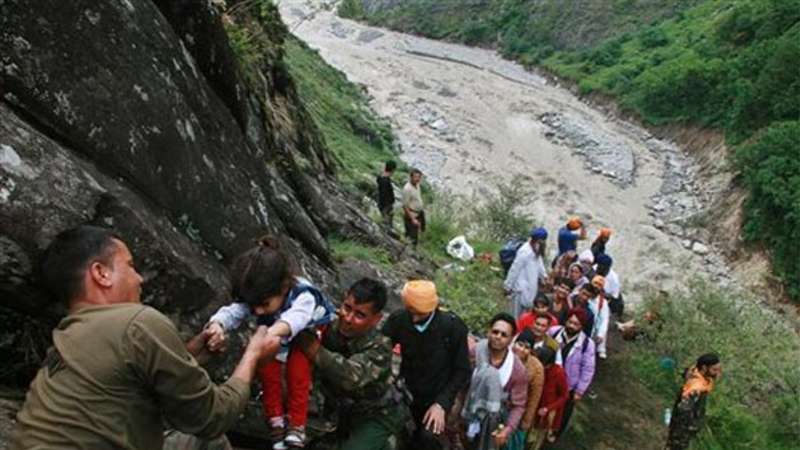
The Annual Crisis No One Prepares For
In Uttarakhand, flooding is not a rare disaster. It is an annual certainty. Mountain rivers overflow every single monsoon, submerging thousands of square kilometres. Floods affect an average of tens of thousands of people each year. The human toll runs into the hundreds of thousands. Families, livelihoods, and communities are all caught in the same relentless cycle.
The tragedy is compounded by what happens after the water recedes. Contaminated water breeds disease. Stagnant pools become breeding grounds for mosquitoes. Families that survived the initial flooding develop severe health issues from prolonged exposure to dirty water and lack of medical care.
And then there is the displacement. During chaotic evacuations, families are separated. Children are torn from parents who are hustled onto rescue vehicles with barely enough room for people. Livestock owners watch helplessly as rising water carries away animals they cannot reach.
The Hidden Victims
In every flood, the focus of relief operations is rightly on human lives. Evacuations prioritise people. Relief camps are designed for people. Media coverage centres on human stories. This is as it should be. But in the shadow of every human disaster, there are families who receive almost no attention, no funding, and no coordinated response.
Families Cannot Recover Alone
When flood warnings are issued, some families can make decisions. They can gather belongings, move to higher ground, or board evacuation vehicles. But many families cannot process warnings quickly enough. A family in a low-lying village will drown there unless someone comes to help them. Livestock locked in sheds will stand in rising water until it reaches their nostrils. The most heartbreaking aspect of flood-related suffering is how preventable many of them are. In most cases, families did not need sophisticated rescue equipment. They just needed someone to show up.
Rural families are particularly vulnerable. They have no resources coming to get them. A family in a flood-affected village has no higher ground it has been trained to seek, no shelter it associates with safety. It simply runs until it cannot run anymore, and then it waits until it cannot wait anymore. Many do not survive. Those that do are left traumatised, malnourished, and sick from ingesting contaminated water.
The Post-Flood Health Crisis
Surviving the floodwater is only the first challenge. In the weeks that follow, disease spreads rapidly through affected populations. Waterborne diseases, transmitted through contaminated water, cause severe illness in children and adults. Skin infections and fungal diseases ravage people whose bodies were soaked for days. Gastrointestinal parasites thrive in flood conditions.
Without medical intervention, many of these post-flood conditions are fatal. Rural medical infrastructure in flood-prone areas is already stretched thin under normal circumstances. After a major flood, it is essentially non-existent. Clinics are underwater. Supplies are destroyed. Medical professionals themselves are displaced. The families that survived the flood often suffer in the weeks that follow from entirely treatable conditions, simply because no one was there to treat them.
Livelihood Losses and Economic Devastation
For millions of rural Indian families, their homes and farms are not just property. They are economic lifelines. A single home may represent years of savings. A small farm can be the difference between a family eating and going hungry. When floods destroy homes and farms, they do not just take property. They destroy human livelihoods. Families that lose everything in floods often face financial ruin from which they never fully recover. Flood Relief Uttarakhand understands that saving families is inseparable from protecting the communities that depend on them.
How Flood Relief Uttarakhand Responds
Flood Relief Uttarakhand was built on a simple operational principle: when disaster strikes, families need someone who is ready to act immediately, with the right equipment, the right training, and the right coordination. Every hour of delay during a flood costs lives. The programme maintains year-round readiness so that when the first warnings come, teams can deploy within 24 to 48 hours.
Rapid Response Deployment
The programme maintains pre-positioned relief kits in strategic locations across Uttarakhand. Each kit includes emergency shelter materials, food supplies, clean water, medical supplies, and basic tools. When flood alerts are issued by the India Meteorological Department or the Central Water Commission, the nearest response team is activated immediately. Team leaders begin coordinating with local administration, identifying likely family concentration points, and securing temporary shelter locations before the water even peaks.
Each rapid response team consists of trained disaster responders, medical professionals, and logistics coordinators. They operate in teams during rescues, with one person managing logistics and another handling families. Communication is maintained through satellite phones in areas where cellular networks have been knocked out by the flooding. GPS coordinates of every intervention are logged, creating a database that helps predict where families are most likely to need help during future floods.
Emergency Shelters and Medical Care
Rescue is only the first step. Once families are pulled from floodwaters, they need immediate care. The programme sets up emergency shelters on elevated ground near flood zones, typically in community halls, school buildings, or purpose-erected tarpaulin structures. Each shelter provides clean water, food, warmth, and basic medical triage. Families are assessed for injuries, infections, dehydration, and shock. Those requiring advanced treatment are transported to partner medical facilities.
The medical care protocol covers wound cleaning and dressing, dehydration management through oral rehydration, anti-parasitic treatment, and prophylactic antibiotics for people showing early signs of waterborne diseases or respiratory infections. During the 2024 response season, the programme's field medical teams treated over 2,400 people across affected areas. Approximately 95 percent of treated people survived and were either reunited with families or supported through recovery once conditions stabilised.
Long-Term Rehabilitation
One of the most important and most overlooked aspects of flood relief is rehabilitation. When families are evacuated, they are rarely told where to find help afterward. The programme photographs every intervention, records the location of assistance, and posts details on local community boards and social media groups. Where possible, affected families are registered for long-term support. In the 2024 season, the programme successfully supported over 600 families through complete recovery, a number that represents not just immediate relief but family stability and economic recovery for hundreds of rural households.
In Their Own Words
"When the floods destroyed our home, we lost everything. The disaster relief team arrived within days, providing shelter, food, and hope. They are rebuilding our home and helping us restart our lives. This is how to truly help flood victims."
"The flood relief operations saved our village. Emergency response was immediate - shelter, food, medical aid. Now they are rebuilding our homes and schools. This disaster rehabilitation program is giving us our future back."
Flood Relief in Action
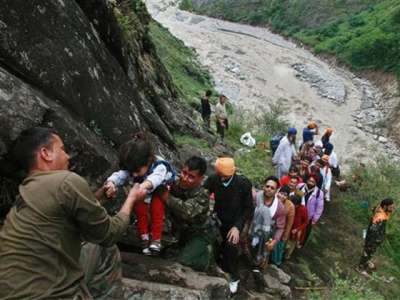
Emergency response India - disaster relief operations reaching flood victims in Uttarakhand
How to help flood victims Uttarakhand - emergency shelter for displaced families
Flood relief Uttarakhand - food distribution and essential supplies for families
Disaster relief India - medical camps providing healthcare to flood-affected communities
Disaster rehabilitation - rebuilding homes and infrastructure in flood-affected villages
About GUS Disaster Relief
GUS Disaster Relief
Hope in Times of Crisis
How Flood Relief Works in Uttarakhand — A Donor's Guide
Uttarakhand's geography makes it uniquely vulnerable: steep valleys funnel monsoon rain into flash floods; glacial lake outbursts can arrive with minutes of warning; and remote hamlets may be cut off from district headquarters for days. Relief is not one event — it is a cycle of alert → evacuation → emergency camp → health surveillance → rebuild that repeats every year between June and October.
What happens in the first 72 hours
GUS Disaster Relief pre-positions tarpaulins, dry rations, water purification tablets, and medical kits at nodal points before peak monsoon. When IMD issues orange or red alerts, rapid teams move to Chamoli, Pithoragarh, Rudraprayag, and Tehri corridors. Priority actions: evacuate stranded families to higher ground, set up temporary shelters with separate sanitation for women and children, and establish a medical triage tent for waterborne illness and trauma injuries.
Where your donation goes
- Emergency phase (days 1–14): shelter kits, cooked meals, chlorine tablets, blankets, baby formula.
- Stabilisation (weeks 2–8): temporary classrooms, livelihood cash grants for lost livestock, psychosocial first aid.
- Rehabilitation (months 3–18): home repairs, bridge access, seed grants for farmers, school reopening support.
Corporates mapping Schedule VII disaster-management CSR can pair financial support with employee volunteering for kit packing days. Individuals giving ₹1,000+ receive email updates with geotagged photos from the field team.
Related: Flood animal rescue operations · CSR disaster projects · Volunteer in India
Frequently Asked Questions
267 People Stepped Up. Will You?
It takes 2 minutes to sign up and one share to start helping flood victims rebuild their lives. No special training needed. No minimum commitment. Just the will to be there when disaster strikes.